Episode 67 – Expectation Drift: How Vague Leadership Breaks Execution

Episode 67 – Expectation Drift: How Vague Leadership Breaks Execution

Welcome to episode 67 of Leadership Kung Fu!
If you’ve ever come up empty-handed when searching for answers from a leader, or your team is divided on what they thought the project completion standard was, you might have experienced Expectation Drift! Sandi and Jen jump in to tackle this topic to help teams and leaders identify and get ahead of a potential problem. Listen along as they discuss:

  • What IS Expecation Drift and how it happens
  • Employee engagement rates and other statistics around misalignment
  • What happens when leaders don’t know what expecations are
  • Leaders as learners
  • The role of accountability in expecation drift
  • Micromanaging vs. checking in
  • A rock analogy
  • How to get in front of the Drift and own it

and much more!

Thank you so much for listening! If you like what you hear, leave us a review on your favorite podcast platform, and make sure to check out the video cast under the “Videos” tab or over on the Leadership Kung Fu Youtube Channel!
Connect with Jen on LinkedIn and visit her website Own Up!®
Connect with Sandi on LinkedIn and visit her website Satori Consulting, Inc!

Have a comment, question, or topic for Sandi and Jen? Email us at podcast@dramafreeworkforce.com or leave us a comment on LinkedIn. If you like what you hear, leave us a review on your favorite listening platform!

Episode 66 – Stop Outsourcing Thinking: Rebuilding Your Team’s Problem-Solving Muscles

Episode 66 – Stop Outsourcing Thinking: Rebuilding Your Team’s Problem-Solving Muscles

It’s critical that you know that Episode 66 of Leadership Kung Fu is here!

Welcome to February’s topic of what outsourcing thinking actually does to your team and how your practices can keep the problem-solving muscles healthy. Sandi and Jen dive right into:

  • How the cost of time with critical thinking is a lie
  • Low accountability and leaderned helplessness
  • The role of psychological safety
  • System 1 and System 2 thinking
  • The importances of exploring your problem-solving tools
  • Critical Thinking and A.I.
  • Leadership self-reflection and the role it plays
  • Managing discomfort
  • How many places you might have abandoned thinking

and much more!

Thank you so much for listening! If you like what you hear, leave us a review on your favorite podcast platform, and make sure to check out the video cast under the “Videos” tab or over on the Leadership Kung Fu Youtube Channel!
Connect with Jen on LinkedIn and visit her website Own Up!®
Connect with Sandi on LinkedIn and visit her website Satori Consulting, Inc!

Have a comment, question, or topic for Sandi and Jen? Email us at podcast@dramafreeworkforce.com or leave us a comment on LinkedIn. If you like what you hear, leave us a review on your favorite listening platform!

Episode 65 – Strategy is Not a Slide Deck

Episode 65 – Strategy is Not a Slide Deck

Starting off 2026 strong, it’s episode 65 of Leadership Kung Fu!

Join Sandi and Jen in this new year as they revisit the topic of strategy in the workplace and how to get it unstuck from your meeting slide deck and out in action in your workforce. Listen along as they discuss:

  • Strategy to action
  • How strategies from Q4 are looking in Q1
  • Personal anecdotes
  • The importance of your “No” list
  • Facing the fears of “what if”
  • Real risk vs. risks we THINK are real
  • What strategy is and is not
  • Operationalizing
  • How alignment is an ongoing conversation
  • What happens when everything is deemed important
  • What each level of leadership needs to do with the strategy from the top
  • The importance of choosing the right words
  • Strategy upkeep and metrics
  • How strategy can die and what happens if it does
  • The effect of run-time on strategy
  • The 5 take-aways of strategy

and more!

Thank you so much for listening! If you like what you hear, leave us a review on your favorite podcast platform, and make sure to check out the video cast under the “Videos” tab or over on the Leadership Kung Fu Youtube Channel!
Connect with Jen on LinkedIn and visit her website Own Up!®
Connect with Sandi on LinkedIn and visit her website Satori Consulting, Inc!

Have a comment, question, or topic for Sandi and Jen? Email us at podcast@dramafreeworkforce.com or leave us a comment on LinkedIn. If you like what you hear, leave us a review on your favorite listening platform!

Episode 64 – Your New Leader Isn’t Ready (Yet!)

Episode 64 – Your New Leader Isn’t Ready (Yet!)

Start making plans, episode 64 of Leadership Kung Fu is here!

Jen and Sandi are thinking about the future on today’s episode and discussing workplace succession plans! What happens when your CEO has a medical event? Can someone easily take over if your manager has a family emergency? Who steps in when retirements are announced? Join Sandi and Jen as they cover how you and your team can think ahead as well as:

and more!

Thank you so much for listening! If you like what you hear, leave us a review on your favorite podcast platform, and make sure to check out the video cast under the “Videos” tab or over on the Leadership Kung Fu Youtube Channel!
Connect with Jen on LinkedIn and visit her website Own Up!®
Connect with Sandi on LinkedIn and visit her website Satori Consulting, Inc!

Have a comment, question, or topic for Sandi and Jen? Email us at podcast@dramafreeworkforce.com or leave us a comment on LinkedIn. If you like what you hear, leave us a review on your favorite listening platform!

Episode 63 – Strategic Momentum: The Discipline of Aligned Action

Episode 63 – Strategic Momentum: The Discipline of Aligned Action

Our actions have aligned to bring you Episode 63 of Leadership Kung Fu!
Join Sandi and Jen as they excitedly tackle the topic of aligned action and how your teams’ strategies can hinge upon it. Dive in with them as they cover:

  • What gets in the way of aligned action
  • Fragmented ownership
  • Working in silos vs. moving forward collectively
  • Decisions vs. feedback
  • Where incentives knock you out of alignment
  • Dashboards
  • Fighting stagnant policies/standards
  • The curse of unwillingness
  • Leadership drift
  • Giving strategy a chance to breathe
  • Buy-in vs. agreement
  • Movement based on workplace agility
  • Chance of success based on aligned action

and much more!

Thank you so much for listening! If you like what you hear, leave us a review on your favorite podcast platform, and make sure to check out the video cast under the “Videos” tab!
Connect with Jen on LinkedIn and visit her website Own Up!®
Connect with Sandi on LinkedIn and visit her website Satori Consulting, Inc!

Have a comment, question, or topic for Sandi and Jen? Email us at podcast@dramafreeworkforce.com or leave us a comment on LinkedIn. If you like what you hear, leave us a review on your favorite listening platform!

Episode 62 – First Moves Matter: Helping a New Leader

Episode 62 – First Moves Matter: Helping a New Leader

New to the group, it’s episode 62 of Leadership Kung Fu!

Sandi and Jen are enthusiastic about today’s topic of new leaders and how you and your organization can set them up for success and if you’re a new leader, how to tackle that transition with flying colors. Listen in as they discuss:

  • common new leader hurdles and transition difficulties
  • how values shift in a new role
  • the art of letting go
  • what your leadership will look like as you make the shift
  • technical skills and relationship skills
  • how relationships evolve when new leadership occurs
  • where Imposter Syndrome can affect the new role and how limiting it can be
  •  Taming Your Gremlin by Rick Carson
  • troubles with the hand-off
  • trust during the transition
  • leadership groups for new-to leadership leaders
  • perks of being a brand-new leader

and much more!

Thank you so much for listening! If you like what you hear, leave us a review on your favorite podcast platform, and make sure to check out the video cast under the “Videos” tab!
Connect with Jen on LinkedIn and visit her website Own Up!®
Connect with Sandi on LinkedIn and visit her website Satori Consulting, Inc!

Have a comment, question, or topic for Sandi and Jen? Email us at podcast@dramafreeworkforce.com or leave us a comment on LinkedIn! If you like what you hear, leave us a review on your favorite listening platform!

Episode 61 – From Talking to Doing: Why Leadership Teams Stall

Episode 61 – From Talking to Doing: Why Leadership Teams Stall

Welcome to episode 61 of Leadership Kung Fu! Jen and Sandi are talking the talk and walking the walk to bring you today’s topic: why leadership teams can stall! Settle in as they chat about:

  • Words are nice, but action is important
  • Stalling due to fear of conflict
  • Feeling safe in the workplace
  • How multiple priorities can actually be a hindrance
  • Corporate whiplash and fatigue
  • Alignment vs. accountability
  • The Knowing-Doing gap
  • How to stop “The Stall”
  • The One Hard Question
  • What parts you actually play
  • 6 Thinking Hats by Edward de Bono
  • Where your bias lives
  • Timeboxing
  • Meeting habits

and much more!

Thank you so much for listening! If you like what you hear, leave us a review on your favorite podcast platform, and make sure to check out the video cast under the “Videos” tab!
Connect with Jen on LinkedIn and visit her website Own Up!®
Connect with Sandi on LinkedIn and visit her website Satori Consulting, Inc!

Have a comment, question, or topic for Sandi and Jen? Email us at podcast@dramafreeworkforce.com or leave us a comment on LinkedIn! If you like what you hear, leave us a review on your favorite listening platform!

Episode 60 –  The Art of the Mid-Year Check In

Episode 60 – The Art of the Mid-Year Check In

Ready for some self reflection? Here’s episode 60 of Leadership Kung Fu!

Sandi and Jen are asking us to take some time and join them a moment as they chat about the importance of a mid-year check in, not just with our teams, but with ourselves too! Listen along as they highlight:

  • The importance of sense-making
  • Measuring your efficacy, not your results
  • How often are you getting feedback?
  • Your leadership “brand”
  • Behavior that reflects value
  • Reactiveness and the signs of burnout, physical and non
  • Intentional resets
  • A.I. in leadership styles and the most popular uses as of recording
  • Goals and the metrics of goals
  • Are your metrics just a sign of activity?
  • Driving focus
  • The weights of risk and opportunity

and much more!

Thank you so much for listening! If you like what you hear, leave us a review on your favorite podcast platform, and make sure to check out the video cast under the “Videos” tab!
Connect with Jen on LinkedIn and visit her website Own Up!®
Connect with Sandi on LinkedIn and visit her website Satori Consulting, Inc!

Have a comment, question, or topic for Sandi and Jen? Email us at podcast@dramafreeworkforce.com or leave us a comment on LinkedIn! If you like what you hear, leave us a review on your favorite listening platform!

Episode 59 – Conscious Un-Bossing: The New Distaste for Managing

Episode 59 – Conscious Un-Bossing: The New Distaste for Managing

It’s a group effort over here on Leadership Kung Fu, so we’re glad you’re here for episode 59!
Join Jen and Sandi as they dissect the topic of Concious Un-Bossing, and listen along as they cover:

  • Jen’s NEW book Workers are the Solution, Not the Problem: A Guidebook to Leading Differently
  • how Gen Z is bringing changes to the workplace
  • conscious uncoupling
  • what it means to start to change a workplace culture
  • purpose over power
  • inclusivity is a power tool
  • trust at every level and how it becomes an operating system
  • mature accountability systems
  • how group leadership makes you a better person
  • how leading is a capability, not a title
  • what advantages your business can gain from this model
  • how shifting to a new cultural model takes time
  • the books Humanocracy by Gary Hamel and Michele Zanini and The Social Leadership Handbook by Julian Stodd
  • what happens when human solve problems together

and more!

Thank you so much for listening! If you like what you hear, leave us a review on your favorite podcast platform, and make sure to check out the video cast under the “Videos” tab!
Connect with Jen on LinkedIn and visit her website Own Up!®
Connect with Sandi on LinkedIn and visit her website Satori Consulting, Inc!

Have a comment, question, or topic for Sandi and Jen? Email us at podcast@dramafreeworkforce.com or leave us a comment on LinkedIn! If you like what you hear, leave us a review on your favorite listening platform!

Episode 58 – Leading Hybrid and Remote

Episode 58 – Leading Hybrid and Remote

Travel back in time with Jen and Sandi as they chat about a topic that’s not necessarily new, but is certainly still a topic of discussion: working remotely and hybrid workforces!

Whether you’re taking a break in the breakroom or moving laundry inbetween meetings, listen along as Jen and Sandi discuss:

  • The importance of asking questions and the weight of listening
  • a brief conversation about how engagement surveys can fail you
  • thinking about how your work is best done could influece hybrid work management
  • what working in a conducive environment to the work you do can influence work output
  • looking at the work instead of seeking giving “same treatment”
  • what can cause resentment among hybrid teams
  • the strategy of shaping in office/remote work around the type of people who work for/with you
  • the state of strategy
  • your workforce is the solution
  • if you are setting them up for success regardless of environment
  • new terms and slang that have come from 5 years of hybrid workforces
  • how celebrating success is important
  • half thebattle is understanding the correct problems to solve
  • Red Team Thinking benefits

and more!

Thank you so much for listening! If you like what you hear, leave us a review on your favorite podcast platform, and make sure to check out the video cast under the “Videos” tab!
Connect with Jen on LinkedIn and visit her website Own Up!®
Connect with Sandi on LinkedIn and visit her website Satori Consulting, Inc!

Have a comment, question, or topic for Sandi and Jen? Email us at podcast@dramafreeworkforce.com or leave us a comment on LinkedIn! If you like what you hear, leave us a review on your favorite listening platform!

Episode 57 – Reactive Fist, Broken Mind: The Cost of Fearful Leadership

Episode 57 – Reactive Fist, Broken Mind: The Cost of Fearful Leadership

Don’t be afraid, it’s a new episode of Leadership Kung Fu!

This episode is all about fearful leadership and what that can cost your place of business. Jen and Sandi waste no time diving into what can truly be at stake when leadership takes a reactive instead of a strategic approach. Listen along as they delve into:

  • what can trigger reactive leadership
  • how you show up and how that can impact your team and their action
  • what short-term thinking means for long term effects
  • how reactionary actions affect overall messages/goals of a company
  • what drivers trigger responses/what leaders might be afraid of
  • talent drain
  • the fear around fear-based decisions
  • the dangers of a non-response
  • impacts on factors outside of business
  • what helps create strategic calm
  • the importance of time for strategies
  • tools that can help combat reactive leadership

and more! Listen in to help give your leadership tips to retract the reactivity and hold space for strategy.

Thank you so much for listening! If you like what you hear, leave us a review on your favorite podcast platform, and make sure to check out the video cast under the “Videos” tab!
Connect with Jen on LinkedIn and visit her website Own Up!®
Connect with Sandi on LinkedIn and visit her website Satori Consulting, Inc!

Have a comment, question, or topic for Sandi and Jen? Email us at podcast@dramafreeworkforce.com or leave us a comment on LinkedIn! If you like what you hear, leave us a review on your favorite listening platform!

Episode 56 – Deflect and Redirect: Handling Conflict Like a Kung Fu Master

Episode 56 – Deflect and Redirect: Handling Conflict Like a Kung Fu Master

How to deal with conflict can be, well, confliciting! In this episode, Jen and Sandi tackle the topic of conflict and how knowing yourself can aid you in knowing how to master conflict! Listen along as they cover:

  • why conflict can be good for leaders
  • the different types of conflict
  • how to identify what your own conflict behavior is
  • what harm withdrawing from conflict can do 
  • the role of EQ (emotional intelligence) in conflict and the weight it carries
  • the gift of considering different perspectives and the ability to get out of your own head
  • how engaging with others is NOT a weakness in leadership
  • increased communication versatility
  • the importance of sleeping on a decision and taking time to process the information
  • the cost of doing conflict poorly

and more! Tune in to hear more tips so you can conquer conflict with ease!

Thank you so much for listening! If you like what you hear, leave us a review on your favorite podcast platform, and make sure to check out the video cast under the “Videos” tab!
Connect with Jen on LinkedIn and visit her website Own Up!®
Connect with Sandi on LinkedIn and visit her website Satori Consulting, Inc!

Have a comment, question, or topic for Sandi and Jen? Leave us a comment on LinkedIn and be sure to leave us a review on your favorite listening platform.

Episode 55 – Leading with Clarity-Debunking Leadership Myths

Episode 55 – Leading with Clarity-Debunking Leadership Myths

Welcome to Episode 55 of Leadership Kung Fu! Jen and Sandi are back after a shiny new rebrand and  a first episode of 2025! To start out this year, listen along as they tackle topics such as:

  •  what has changed within things you subscribe to and how the workplace is different than what it was 10/15+ years ago
  • how “no” is not a bad word in the workplace
  • vulnerability is a good, healthy thing
  • not all leaders are charismatic
  • Everything DiSC by Wiley
  • results vs. relationships and the importance of workplace connections
  • how relationships ≠ “liking” someone
  • how our words set us up to show up
  • time and energy management
  • HBR: Manage Your Energy, Not Your Time

and more! Tune in as they bust more leadership myths to start your 2025 with clarity!

Thank you so much for listening! If you like what you hear, leave us a review on your favorite podcast platform, and make sure to check out the video cast under the “Videos” tab!
Connect with Jen on LinkedIn and visit her website Own Up!®
Connect with Sandi on LinkedIn and visit her website Satori Consulting, Inc!

Have a comment, question, or topic for Sandi and Jen? Leave us a comment on LinkedIn! 

Episode 54 – The Art of Goal Setting, Keeping, and Achieving

Episode 54 – The Art of Goal Setting, Keeping, and Achieving

Happy holidays from Organizational Transformational Kung Fu: The Podcast! Jen and Sandi are looking to the future this week and talk about goals and how to set them, keep them, and meet them! Follow along as they chat about:

  • their year in review
  • what reflection can do for you and writing vs. typing/digital record keeping
  • hard vs. soft transformations
  • the role of practice and support in discipline
  • what we’re really doing when we “let ourselves off the hook”
  • the importance of the set up short term does for long term
  • how we are influenced by the number of goals we set
  • Atomic Habits by James Clear 
  • considering a “shift” instead of a “stop”
  • an exciting new change coming to OTKF in 2025!

We want to thank each and every one of you for your support all throughout 2024, and we cannot wait to see what we can do in 2025! See you next year!

Thank you so much for listening! If you like what you hear, leave us a review on your favorite podcast platform, and make sure to check out the video cast under the “Videos” tab!
Connect with Jen on LinkedIn and visit her website Own Up!®
Connect with Sandi on LinkedIn and visit her website Satori Consulting, Inc!

Have a comment, question, or topic for Sandi and Jen? Leave us a comment on LinkedIn! 

Episode 53 – Listening as a Leader

Episode 53 – Listening as a Leader

In this week’s episode of OT Kung Fu, Jen and Sandi revisit the types of listening they talked about with author Sean Grace and ponder how the listening types affect us in the workplace. Join them as they cover:

and more!

Thank you so much for listening! If you like what you hear, leave us a review on your favorite podcast platform, and make sure to check out the video cast under the “Videos” tab!
Connect with Jen on LinkedIn and visit her website Own Up!®
Connect with Sandi on LinkedIn and visit her website Satori Consulting, Inc!

Have a comment, question, or topic for Sandi and Jen? Leave us a comment on LinkedIn! 

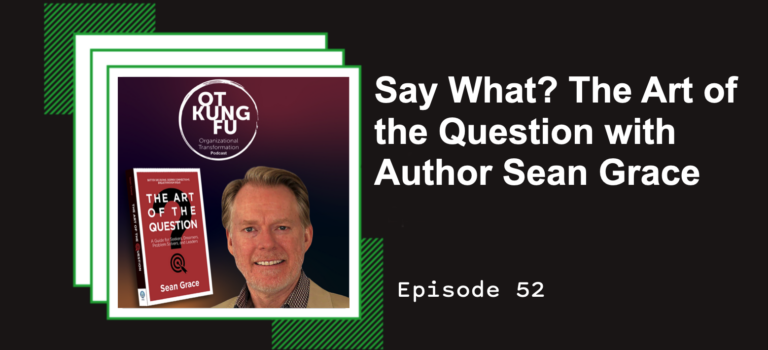
Episode 52 – Say What? The Art of the Question with Author Sean Grace

Episode 52 – Say What? The Art of the Question with Author Sean Grace

Welcome back to OT Kung Fu: The Podcast!

Sandi and Jen are joined this week by the incredible author Sean Grace!

From Sean’s website: 

“Sean Grace is a communication consultant, author, coach, and speaker, with over 25 years of experience developing and training sales, marketing, and leadership talent across diverse industries. His unique brand of business consulting is forged from his long career in media, advertising, and the creative arts.

Sean studied music performance at the Juilliard School and SUNY Purchase, and finance at Wharton. As an award winning musician and multi-instrumentalist, he borrows techniques from jazz improvisation to help foster creative collaboration and cooperation within and across teams.

Sean’s track record of success as a consultant and coach has earned him a reputation as a trusted advisor and trainer to some of the world’s most innovative and successful organizations.”

Listen along as Jen, Sandi, and Sean discuss topics from Sean’s new book The Art of the Question: A Guide for Seekers, Dreamers, Problem Solvers and Leaders such as:

  • the value of creative thinking in a post-pandemic workplace
  • Sean’s workflow in how he got started in the formulation of questions
  • how vital curiosity and openness is to the process of questions
  • the 3 phase model
  • types of listening and the effect on conversations and situations
  • the Socratic 8
  • his work as a musician and his album “Wonderland”
  • the origin of the name OT Kung Fu!

You can connect with Sean at peakluma.com and find his book over at Amazon!

Thank you so much for joining us, Sean!

Thank you so much for listening! If you like what you hear, leave us a review on your favorite podcast platform, and make sure to check out the video cast under the “Videos” tab!

Have a comment, question, or topic for Sandi and Jen? Leave us a comment on LinkedIn! 

Episode 51 – Conversations on Change with Curtis Bateman

Episode 51 – Conversations on Change with Curtis Bateman

Welcome to Episode 51 of OT Kung Fu: The Podcast!

Joining Jen and Sandi this week is Curtis Bateman, co-author of Change: How to Turn Uncertainty Into Opportunity and vice president of direct international offices for FranklinCovey. From the FranklinCovey site: 

                “With over twenty-five years of experience in the training industry, Curtis is an internationally recognized presenter, content developer, change consultant, business leader, and coach. His passion for enabling organizations “at change” resulted in the co-creation of transformative, industry-leading solutions, including Change ElementLeaders@ChangeManaging MillennialsMillennials@Work, and the Change Practitioner.” 

We’re thrilled to have Curtis join us to talk about what change means to a leader and the workplace as a whole! Listen along to the conversation as they cover: 

  • -the behaviors that show up when change comes
  • -what it means to be reactive vs. choosing a reaction
  • -what a change introduction does
  • -risks and rewards of change
  • -how leaders can maintain good effects of change
  • -compliance vs. engagement

and more!

You can read more about Curtis and check out more of his articles at his FranklinCovey page and follow him on his LinkedIn!
Thank you so much for listening! Make sure to check out the video cast under the “Videos” tab!

Have a comment, question, or topic for Sandi and Jen? Leave us a comment on LinkedIn! 

Episode 50 – Thinking About Hidden Potential by Adam Grant

Episode 50 – Thinking About Hidden Potential by Adam Grant

It’s OT Kung Fu’s 50th episode!
We have another book review episode, this week featuring Hidden Potential by Adam Grant! Join Jen and Sandi while they cover topics like:

-Performance Reviews and how they have changed from potential to goal-oriented
-How imperfect leaders are more beneficial than “perfect” leaders
-How meeting folks where there are at instead of where you want them to be cultivates a better workplace culture
-High potential compared to related experience
-Why learning agility is more valuable as a leadership predictor
-Why self-reflection is such an important tool
-Learning curves and useful uncomfortability
-Imposter Syndrome and feedback
-Self-awareness and how it echoes into other aspects of life
-How a “scarcity”mindset affects you
-“Learning Organizations” and follow-through
-How tech and instant delivery plays in

You can check you more about Adam Grant book and take the assessment on his page at adamgrant.net!

Thank you so much for listening! Make sure to check out the video cast under the “Videos” tab!
Connect with Jen on LinkedIn and visit her website Own Up!®
Connect with Sandi on LinkedIn and visit her website Satori Consulting, Inc!

Have a comment, question, or topic for Sandi and Jen? Leave us a comment on LinkedIn! 

Episode 49 – Leadership and Building Organizational Capacity with Todd Conklin

Episode 49 – Leadership and Building Organizational Capacity with Todd Conklin

You made it to the end of July, and we have a new episode of OT Kung Fu for you to celebrate and gear up before a new month begins tomorrow!

Jen and Sandi are joined on this episode by Dr. Todd Conklin, author of Pre-Accident Investigations: An Introduction to Organizational Safety  as well as host of his organizational safety podcast of the same name. From his website:
     “Todd Conklin spent 25 years at Los Alamos National Laboratory as a Senior Advisor for Organizational and Safety Culture.  Los Alamos National Laboratory is one of the world’s foremost research and development laboratories; Dr. Conklin has been working on the Human Performance program for the last 15 years of his 25-year career.  It is in this fortunate position where he enjoys the best of both the academic world and the world of safety in practice.  

        Conklin holds a Ph.D. in organizational behavior from the University of New Mexico.  He speaks all over the world to executives, groups and work teams who are interested in better understanding the relationship between the workers in the field and the organization’s systems, processes, and programs.  He has brought these systems to major corporations around the world.  Conklin practices these ideas not only in his own workplace, but also in the event investigations at other workplaces around the world.  Conklin’s best selling book, Pre-Accident Investigations: An introduction to Organizational Safety is a best selling book on safety.  Conklin has several other books and a huge podcast following for his twice-weekly podcast of the same name.  Conklin defines safety at his workplace like this:  ‘Safety is the ability for workers to be able to do work in a varying and unpredictable world.'”

Listen along as they talk about the 5 HOP principles mentioned in Dr.Conklin’s book and how leadership mindsets can flourish within those principles, what simply having confidence can do for you, “why?” versus “how?” and what kind of leader flocks to each question, and more! Thank you so much for joining us on this episode, Dr. Conklin!

You can find all of Dr. Conklin’s books and his podcast on his page on HOP Hub here.
Dr. Conklin and Jen will be speaking at the next Conklin Conference in Santa Fe, NM from September 10th-September 12th 2024. You can sign up for the conference HERE.

Thank you so much for listening! Make sure to check out the video cast under the “Videos” tab!
Connect with Jen on LinkedIn and visit her website Own Up!®
Connect with Sandi on LinkedIn and visit her website Satori Consulting, Inc!

Have a comment, question, or topic for Sandi and Jen? Leave us a comment on LinkedIn! 

Episode 48 – Influence as a Strategy: Getting Better Outcomes with Others

Episode 48 – Influence as a Strategy: Getting Better Outcomes with Others

Happy Summer! Beat the heat with Sandi and Jen and listen along as they tackle the topic of influence (as a person, not for social media)! Today they cover:

  • -How reciprocity is different within the workplace
  • -How you show up as a leader to your peers vs. to your boss
  • -The traits of a successful workplace influencer
  • -Their love and use of the EverythingDiSC® by Wiley within training they have done
  • -Negotiation awareness and the balance required to not cross the line into -manipulation
  • -Persuasion vs. Influence

and more! 

Thank you so much for listening! Make sure to check out the video cast under the “Videos” tab!
Connect with Jen on LinkedIn
Connect with Sandi on LinkedIn

Have a comment, question, or topic for Sandi and Jen? Leave us a comment on LinkedIn!

Episode 47 – Work-Life Bloom Interview with author Dan Pontefract

Episode 47 – Work-Life Bloom Interview with author Dan Pontefract

We have a real treat for listeners today! Jen and Sandi are joined by award-winning author Dan Pontefract to talk about his new book Work-Life Bloom: How to Nurture a Team that Flourishes! From his website: “Dan is a renowned keynote speaker who has presented at four TED events and delivers approximately 50 keynotes annually. He is an adjunct professor at the University of Victoria’s Gustavson School of Business and has received over 25 industry, individual, and book awards.” Listen along as Dan, Sandi, and Jen cover topics such as:

  • -The origin of Work-Life Bloom
  • -Personas in Work/Life Balance
  • -“Soil” vs “Water” tests in the workplace
  • -Workplace Vulnerability and Gen Z

You can connect with Dan on his website donpontefract.com, and you can check out the book’s page at worklifebloom.com
Dan’s Assessment: worklifebloom.com/work-life-assessment
Connect with Dan on LinkedIn!

Thank you so much for listening! Make sure to check out the video cast under the “Videos” tab!
Connect with Jen on LinkedIn
Connect with Sandi on LinkedIn

Have a comment, question, or topic for Sandi and Jen? Leave us a comment on LinkedIn!

Episode 46 – Critical Thinking and Problem Solving for Teams: A Red Teaming Review

Episode 46 – Critical Thinking and Problem Solving for Teams: A Red Teaming Review

Welcome back to OT Book Club, er, we mean OT Kung Fu! Jen and Sandi invite you to listen in as they discuss “Red Teaming: How Your Business Can Conquer the Competition by Challenging Everything” by Bryce G. Hoffman.

Enjoy the ASMR of Jen and Sandi flipping through to their favorite parts and points of the book and how you can empower your teams to think critically in tough situations, and how you can get that critical thinking to produce critical solutions! If you want Jen and Sandi to review more books/literature about teams or accountability in the future, let us know!

Thank you so much for listening! Make sure to check out the video cast under the “Videos” tab!
Connect with Jen on LinkedIn
Connect with Sandi on LinkedIn

Have a comment, question, or topic for Sandi and Jen? Leave us a comment on LinkedIn!

Episode 45 – The Customer Experience and a Coaching Approach with Dan Coldwell

Episode 45 – The Customer Experience and a Coaching Approach with Dan Coldwell

Here to tell you not to live in fear of bad reviews, Jen and Sandi are joined by Dan Coldwell this week, a colleague of Sandi’s at Satori Consulting, Inc. Dan has 30 years of experience in financial services as an executive and industry speaker and has also served as chief marketing and chief operations officer in past positions. He is a hockey certified coach, and he “cross-pollinates” (as he puts it) between the business and sports world.

Listen along as they chat about:

  • -acting on feedback/pain points
  • -the 3 steps of responding to feedback
  • -Feedback collection Do’s and Don’ts
  • -how to not fear bad reviews because of what they do for good reviews

Thank you so much for joining Jen and Sandi, Dan! If you’d like to chat more with Dan about the customer experience, you can contact him through the Satori Consulting, Inc. site.

Thank you so much for listening! Make sure to check out the video cast under the “Videos” tab!
Connect with Jen on LinkedIn
Connect with Sandi on LinkedIn

Have a comment, question, or topic for Sandi and Jen? Leave us a comment on LinkedIn!

Episode 44 – Transformational Leadership with Cara Cameron

Episode 44 – Transformational Leadership with Cara Cameron

Happy first podcast of 2024! We’re starting out this new year with a treat for you- Jen and Sandi are joined by Sandi’s colleague Cara Cameron, who holds the position of Chief Future of Work for Mutual Insurance. She has worked in Human Resources for over 15 years and is passionate about developing leaders. With her Chief Future of Work position, she is able to better analyze how the changing workforce impacts the organization, teams, and how those parties respond to the change. Listen along as Jen, Sandi, and Cara talk about:

  • -How do employees want to work/what they are looking for from a Chief Future of Work
  • -how the position develops and implements plans around intention and how HR supports those intentions
  • -how they meet skepticism and the “I’ll believe it when I see it” attitude
  • -how supportive CEOs/Presidents/Leadership are the keys to enacting positive change
  • -what it means when you understand where your team is through touch points and intentional support
  • -that Performance Management is an ongoing process

Thank you so much for listening! Make sure to check out the video cast under the “Videos” tab!
Connect with Jen on LinkedIn
Connect with Sandi on LinkedIn

Have a comment, question, or topic for Sandi and Jen? Leave us a comment on LinkedIn!

Episode 43 – Change Starts with You

Episode 43 – Change Starts with You

Surprise! One additional episode before the New Year! This week, Jen and Sandi discuss changes in the workplace and how those changes come about. It all starts from the same place: you! Join them as they cover:

  • -how change is not linear, but dynamic
  • -how to go about thinking about change and understanding the “why” of change
  • -how changing requires vulnerability
  • -the Pyramid of Readiness model by Cy Wakeman
  • -the level of awareness in change
  • -self-reflection when it comes to change

and more!

Enjoy this last episode of 2023, and Jen and Sandi will see you in 2024!

Check out the Video cast under the “Video” tab!
Connect with Jen on LinkedIn
Connect with Sandi on LinkedIn

Have a comment, question, or topic for Sandi and Jen? Leave us a comment on LinkedIn!

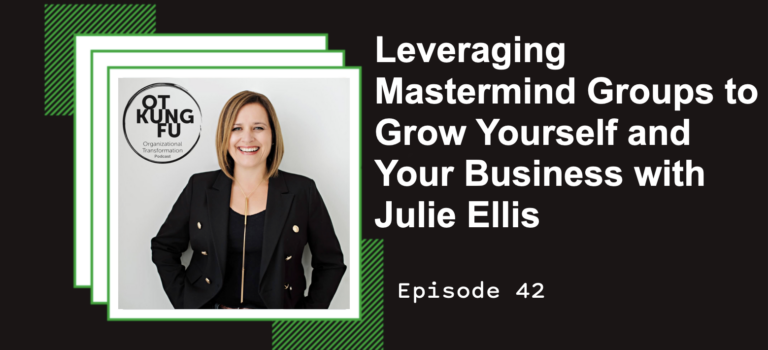
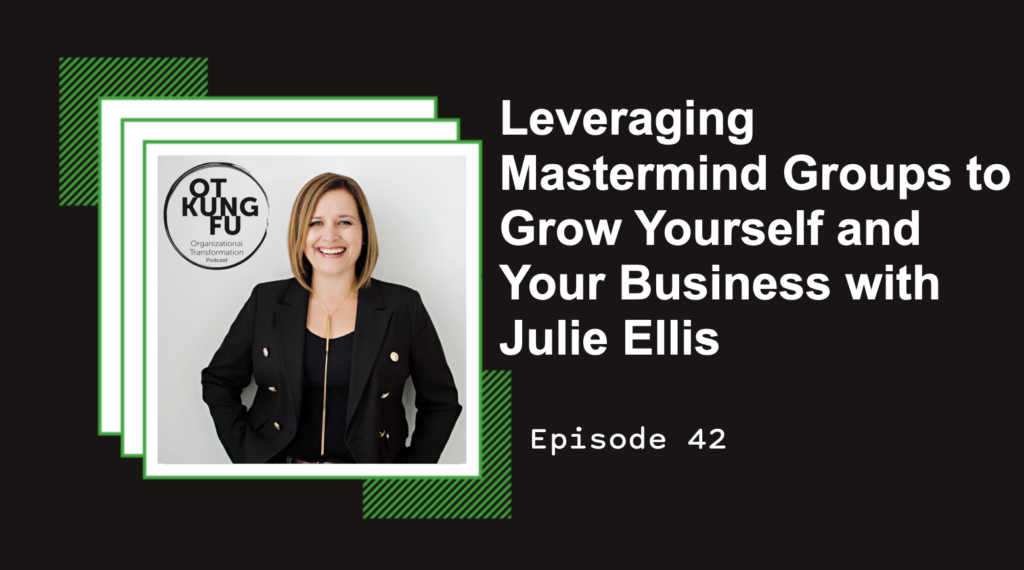
Episode 42 – Leveraging Mastermind Groups to Grow Yourself and Your Business with Julie Ellis

Episode 42 – Leveraging Mastermind Groups to Grow Yourself and Your Business with Julie Ellis

Happy December! This week, Jen and Sandi are joined by fellow entrepreneur and author Julie Ellis! Join the trio as they discuss:

  • -Julie’s start with Mabel’s Labels and how she scales her leadership systems for different sized teams at different revenue numbers
  • – Julie’s new Mastermind project: a peer-reviewed mentorship for women in business and how to scale your successes
  • -What evolutions take place as your business grows in sales and in people and the leadership needs that come from that
  • – Julie’s Book Big Gorgeous Goals:How Bold Women Achieve Great Things

Thank you so much for joining us, Julie! If you have a question for Jen, Sandi, or Julie, leave a comment below or connect with them on LinkedIn!

You can find Julie by clicking the following:

Julie’s Linktree
Julie’s Website
Julie’s LinkedIn
Buy Julie’s Book

Check out the Video cast under the “Video” tab!
Connect with Jen on LinkedIn
Connect with Sandi on LinkedIn

Have a comment, question, or topic for Sandi and Jen? Leave us a comment!

Episode 41 – Strong Leaders Know They Are Imperfect

Episode 41 – Strong Leaders Know They Are Imperfect

In this episode of OT Kung Fu, join Jen and Sandi as they dive into how strong leaders are able to recognize their own shortcomings to encourage their own growth and stability as leaders. Topics in this episode include:

– self reflection and the act of identifying your own insecurities and how that is a helpful skill

-Imposter syndrome

-The Johari Window

-Humility and learning from mistakes

-How being vulnerable is vital to learning

-Adaptability and Inclusivity within that self-reflection

Check out the Video cast under the “Video” tab!


Connect with Jen on LinkedIn

Connect with Sandi on LinkedIn

Have a comment, question, or topic for Sandi and Jen? Leave us a comment!

Episode 40 – Leadership Training at the Top

Episode 40 – Leadership Training at the Top

Join Jen and Sandi LIVE from New York (not on Saturday Night, unfortunately) as they discuss how often the teams at the top and how the top team can be skipped when they start investing in team learning and workplace learning. They touch on the importance of top teams always checking in with their own learning as organizational health can shift and grow.

Editor’s note: due the location and way of recording, there is a door noise at the 11:10 mark. Removing this would also remove the voice audio, so we were only able to dampen it. Jen is also wearing jewelry that clicks when moved, and we could not could not separate out without deleting voice lines as well. We apologize if these are distracting.

Have a comment, question, or topic for Sandi and Jen? Leave us a comment in the box below!

Episode 39 – Psychological Safety and Accountability

Episode 39 – Psychological Safety and Accountability

Sandi and Jen explore the topic of what it means when someone feels psychologically safe in a workplace and where that starts for us, and what affect that can have on workplace accountability.

Have a comment, question, or topic for Sandi and Jen? Leave us a comment in the box below!

Episode 38 – Getting Results from DEI Efforts

Episode 38 – Getting Results from DEI Efforts

Jen and Sandi take on a relevant topic of DEI- Diversity, Equity, and Inclusion within the workplace to ensure it’s not just a token requirement that is met simply to tick a box. They round out Pride Month by placing the workplace and ourselves under the microscope with how to we recognize and shift into DEI mindsets.

Episode 37 – Meeting Disciplines

Episode 37 – Meeting Disciplines

Join Sandi and Jen as they tackle the topic of meetings, the kind of people who show up to them, and what makes a meeting actually worth your time to attend. As the nature of meetings has changed in recent years, Jen and Sandi encourage reflection on the hows and whys of meetings and their attendees at their cores.

Episode 36 – Coaching Leaders

Episode 36 – Coaching Leaders

Join Sandi and Jen as they dive into what it takes and means to coach leaders and how to encourage them and keep them as new folks are stepping into leadership roles. They also discuss how leaders can learn and adapt that “coaching” role as modern leadership takes on more than previous years.

Episode 35 – Establishing Teams and Team Norms

Episode 35 – Establishing Teams and Team Norms

Jen and Sandi come to you today talking about what it a team truly is and what it takes to establish that team and the normalities needed for the team to function cohesively and productively.

Episode 34 – Good Strategy, Bad Strategy

Episode 34 – Good Strategy, Bad Strategy

Join Sandi and Jen as they discuss good strategies in the workplace versus bad ones, and how to get your team through both. Listen in as they discuss some of their favorite strategy authors, resources, and inspirations to navigate process and product.

Episode 33 – Leading in Stressful Times

Episode 33 – Leading in Stressful Times

This week, Jen and Sandi discuss the workplace post-pandemic, and the humanness of the stresses that are sourced from the adaptations we’ve had to make. They offer some solutions to keeping yourself and your team stress-free while navigating hybrid work environments.

Episode 32 – Retention

Episode 32 – Retention

Sandi and Jen meet to discuss retention of employees in the workplace and what that looks like in 2023. With much of the workforce now remote, what can managers and leaders do to keep them engaged, and what does that look like versus those who wanted to come back to the office? Tune in to hear how things have changed and how to navigate the waves of management.

Episode 31 – Strategic Whiplash

Episode 31 – Strategic Whiplash

Jen and Sandi discuss VUCA-Volatility, Uncertainty, Complexity and Ambiguity and what the impact of changing strategies can bring to the pace of our lives and the business world. What events in the workplace give us whiplash, and how do we come out of it?

Episode 30 – Neuroscience of Accountability

Episode 30 – Neuroscience of Accountability

Sandi and Jen interview Reut Schwartz-Hebron. Reut Sandi and Jen discuss how accountability interacts with neuroscience and how that affects work and life. Reut trains and supports coaches, consultants, and HR leaders to complete their Certification in Applied Neuroscience.

Click Here to learn more about Reut Schwartz-Hebron

Episode 29 – Own Up! Drama Free Accountability

Episode 29 – Own Up! Drama Free Accountability

Sandi interviews her co-host, Jen about her new book: Own Up! How to Hold People Accountable without all the Drama. Jen and Sandi talk about what is in the book and go through the Six Ownership Steps model of Accountability™ for Mangers and Leaders.

Click Here buy and get more info about the Own Up! book

Focusing on Culture to Drive Leadership Strategy

In Fall of 2018, Gary Anderson was hired to be the CEO of Nova Mutual Insurance in Ontario. This was a new position as Nova Mutual was a newly merged organization.

Now two and a half years post merger, Gary in his first C-suite role is clearly writing his own playbook. Gary and his team at Nova Mutual are doing things a little different, and they believe that culture will drive results, so although the results matter, culture trumps results.

Gary is not the typical CEO, and in fact carries the title of Chief Empowerment Officer.

But is that just a cute play on words, or are there significant differences in the role he plays in the office? At Nova Mutual, one of their chosen core values is empowerment, and according to Gary, the title change seemed to fit the mold. At Nova they pride themselves in doing things differently so much so that even now Gary is considering the next evolution of his role. 

There are several pieces to the puzzle of culture and transitioning from a traditional office to an office driven by culture, and Gary believes it starts with servant leadership.

Servant Leadership

A servant leader could be well-compared to the scrum master. If you haven’t heard of this term before, a scrum master is an individual that facilitates good discussions, but isn’t the expert. Their primary goal is to listen and remove obstacles that are hindering the real experts from creating the best team or outcome  possible. 

If a traditional office structure is a hierarchy like a triangle, servant leadership means turning that triangle bottom up. As a servant leader, you’re removing obstacles, allowing the superstars to do their thing, and in turn they’re going to make things more efficient because they’re making the decisions about their job and how to streamline it.

Instead of having one leader at the top, with all of the pressure and control, there are many minds figuring out the details of how to get done what needs to be done in the best way possible. By removing the top down approach you start getting all sorts of ideas that no single ‘top-dog’ would ever have the time, freedom, or energy to think of.

When you have this kind of participation, it paves the way for buy-in, rather than begrudging (or worse, apathetic) compliance.

Issues with Traditional Top-Down Leadership

We know some of you might be wondering if this change is even worth the effort. If it’s not broke, don’t fix it, right? However, there are a few clear issues that come with traditional top-down leadership, and there’s one in particular that is impossible to avoid and that is poor communication. Top-down leadership means there’s someone at the top with typically three people as next-level leaders, who in turn relay information to 10 other employees, and continuing down the line. 

Usually, this process of communication doesn’t go well, because somewhere within the middle management, details start to get lost, twisted, or added to.

Like a classic round of the popular party game Telephone, the message totally changes by the time you’re done. That’s exactly what traditional top-down management communication does.

Transitioning to a Different Leadership Strategy

When transitioning to a completely different leadership strategy and structure, you have to start by gathering information about the existing culture. By using preliminary surveys, you can reveal a lot of information, mostly from the comment sections. The typical click type answers can lead you down a general path, but it’s the comments that are key.

You’ll find, as you get to know the existing culture and individuals, there is a wide difference in beliefs, priorities, talents, and expectations. Somehow, you have to convince this group of diverse people to buy into a new culture and a new identity. But before that, you’ve got to decide what you want that culture to be. 

Culture will happen regardless of what you do. It’s constant. You can either be completely invested in constructing or influencing it, or you can do nothing and it will create itself. 

Gary used the first year as the transition year, and his goal was simply to bring everyone together. Not transforming anything, or making big moves, just getting everyone accustomed to these new concepts. 

One step in this transition is getting your team involved by participating in conversations about purpose and values. It takes time, but it’s vital to create a safe space to have these conversations, because during transition periods, your team members are all asking themselves the same questions: 

Where do I stand? 

Am I staying, or am I going?

They may find out they’re not a fit. Maybe there’s not a career opportunity for them with the direction you’re going. You want the culture to be a genuine place for conversation and empowerment, so if one of your employees discovers something new they want to do, they will be supported. If they can do that within their current position in the team, great, let’s do it! If they can do it in a different position on the team, also great. If they can’t fulfill that goal with your team, they’re going to have the support they need to find a new job that gives them what they need to grow.

The change is gradual. Some team members might have never been put into a work situation where they could speak freely. Some team members might not believe you mean what you say. Everybody’s watching to see what moves are actually going to stick, and it comes down to trust. You have to build up the trust in advance, before you start making claims or taking chances.

This transition period, where you’re focusing on communication with regular, inclusive conversations is not just for building rapport and practicing for the “real thing.” As the leader listens and the team talks, culture is co-created. You’ll notice patterns in how the team communicates, what they talk about, and why.

Purpose, Values, Culture

Rather than simplifying it as a traditional mission and vision statement that you see on everyone’s website, Nova Mutual chose to alter it. 

They started by answering the question, ‘What is our purpose?” and “Why do we exist?”

Then, they boiled it down to core values. These are catchy buzzwords, and they can sometimes be put on a plaque and ignored, but it’s getting the team members involved in the discussion. Instead of a CEO saying, “We’re going to believe in these three things, and if you don’t like it, hit the road” that’s what this process is all about.

Nova Mutual came up with six values, but Gary made it clear that they could change at any time as the team changes. Here are the words the Nova team  chose:

  • Integrity 
  • Courage (to make decisions that were never made before)
  • Empowerment (to realize you can do it, and you can get your buddies to do it as well)
  • Respect 
  • Service
  • Community

This, they decided, was their true culture.

Ultimately, the servant leadership strategy leads in one direction. However, ater the transition phase, the goal (at least, for Gary at Nova Mutual) was to also create self-managing teams.

Many people think the idea is madness, and wonder how anything gets done, but really it’s just the natural extension of culture-driven strategy. 

At first, you keep it simple with functional management. When the team has a discussion about potential changes, the servant leader (traditionally the “functional manager”), gives options of how these changes could be implemented. Then, they give them a small structure to work with, using examples from what they’ve been doing as a larger team up to this point. For example, meeting together every day, talking about stuff, taking 10 minutes to clarify who is doing what, and being intentional about problem solving within the group.

If self managing teams are going to be high-functioning teams they have to want it. They have to be ready to give 100 percent, especially at the start. As you build trust, the goal is to be able to rely on anyone on your team at any given time. 

Even with loads of experience in the field, this sort of experimentation requires agility. You have to be more infinite minded. The leader will have to identify certain things for the team to achieve that are aspirational. Agile, self-managing teams figure it out together and are highly efficient and collaborative.Creating a culture of servant leadership simply lays the groundwork for the magic to happen. 

For more resources from the combined genius of Sandi and Jennifer, check out Management Possible and Satori Consulting Inc.

Jen is the owner of Management Possible® focused on training and coaching multi-level management and leadership individuals and teams nationally and globally. Sandi is the owner of Satori®  Consulting inc. a global consulting firm focused on helping organizations solve complex problems in strategy, leadership and governance.
Coaching vs. Managing

Coaching vs. Managing: Developing Your Organizational Coaching Culture

Companies are looking for managers to get better at developing people, not just managing them. This shift is geared toward improving feedback to be more consistent and frequent between employees from managers. 

It’s fair to say that most people do come to work and they want to do a good job. So how do we keep ramping that up? By coaching your employees, however, most companies need some guidance to wrap their heads around the idea of coaching culture. This concept has been on the uptick over the last several years.

 What’s So Hard About Coaching?

Coaching culture has garnered this reputation for impacting performance. It’s the next big strategy. More and more organizations are investing in coaching skills for managers. Over the last five years or more, companies have paid a lot of money to train managers how to coach, but they’re still struggling to achieve change in how managers actually engage in coaching.

The problem for most organizations is twofold. 

First, results always come first and hold the most sway when managers are evaluated on their performance. Did the team deliver on that expectation? Did they reach the target dollar amount in revenue or cost savings? Did they implement quickly and on target? Did they reach their goals? The qualitative data always trumps development efforts. 

Second, managers are rarely held accountable for coaching their employees. They talk a lot about it, and they use the word coaching, but there’s little accountability actually engaging in it. So there’s no doubt that managers are either having difficulty understanding the difference between coaching and managing or are simply choosing not to do it consistently or with any frequency.. 

The bottom line –  there’s increased conversation about coaching, but the conversations aren’t making that big of a difference.

There have been a few studies that analyze the effectiveness of coaching skills for managers and overall the results aren’t great. 

Organizations think it will be tremendously different when they start implementing a coaching culture. They’ve seen it work with external coaches. It’s a proven method and by providing the tools to managers they rightfully think they’ll get amazing results, but it’s proving to be somewhat disappointing when you look at the results of their actual internal coaching effort and the underwhelming return on investment.

Part of it is a semantics issue, which is impacting the expectations and the results that they want. For the most part, people see ‘“coaching” as feedback skills, and those terms have started to be used interchangeably.They might be getting better at feedback, but it really doesn’t translate into performance development or significant improvement. Employees might be getting better information about what they’re doing or not doing, but that doesn’t mean they agree with what they’re being told, or that they’ve been given any support or direction to improve on it.

Coaching Culture is Not the Same as Feedback

Coaching and feedback are not the same things. For example, a lot of large companies have invested in the GROW model training for managers:

Goal

Reality

Options

Will

It’s meant to simplify the coaching into a conversation that targets the goal, change, or improvement against the reality. What are you doing, and what can be implemented or changed? What are the options? What are the steps for the actual change? Do you, and your team, have the willpower it takes?

There are certain things about this process that initiate a huge conversation. Some managers are intimidated by what that model is asking them to do. It feels messy and time-consuming, and maybe it’s more information than they’re interested in knowing or spending time on. Especially when the pressure organizationally is more about the results not the development–the “what” not the “how.”

The important question is, who owns the coaching culture? Is it the coachee? Is it the manager who owns the coaching? Responsibility is important because this process can feel overwhelming. If you have multiple employees, it could be exceptionally daunting. There’s all this other work that needs to get done, and the temptation to return to managing is real. It’s easier to tell somebody to do something, rather than having a conversation that will motivate them and potentially change their perception of the work they’re doing.

They’ve got to be willing participants. That’s the first role of coaching when you come in from the outside. You can’t start with somebody that is disengaged, because chances are the coaching is too little too late. If you’re looking for managers to engage development, they need a mindset and a belief in the value of it first. You’ve got to have willing participants. They’ve got to be willing to take the time and see it as a l priority. 

The Dilemma of the Internal Coach

One of the issues is that people always want to do it internally. Of course, if possible, you absolutely should. However, especially in big companies, confidentiality and the sharing of information of coaching engagements must be addressed.

With an external coach there’s a release valve there for people to be able to speak their mind, to really get to some of the things that need to be dealt with. Whereas when you’re trying to do that internally, confidentiality can create an issue. For example, if somebody you’re working with says something that could potentially be an HR issue, what then is your obligation to say something to HR? It can get pretty mucky, internally. But the whole idea of the coaching is to have an open dialogue. 

To be able to have open dialogue for topics of a more difficult level, managers need to break through the uncomfortable, unfamiliar level first. Usually, after a company has used an external coach, they’ll want to find out what they can do on their own. If you’ve had good external coaches that have made an impact on the business, it’s a natural progression to want to run it internally.

Employees want more engagement relative to their skill development, as opposed to just being sent for training. Similarly, leadership doesn’t want another no-impact program to add to the budget.  However, they’ll buy-in to coaching efforts as an investment in their management development. Why? Because coaching is personalized and very targeted to specific roles and circumstances, which training programs don’t always provide.

If as a manager you start getting good as an internal coach, it creates a supportive, disciplined environment. It makes it easier when you get frustrated, stuck, or stymied. You’ve got an internal structure to pull a coach in when there’s a problem with a team. 

When we compare coaching to managing, managing is really about the work, tasks, and projects. It’s about setting the expectations, modifying the expectations, giving feedback about how you’re doing against those expectations. Putting that into a basketball metaphor, managing is more like the scoreboard and the referee. How are we doing? What’s the score? Are we fouling out? Are we playing by the rules? 

Coaching, on the other hand, is the conversation that takes place during the timeout to evaluate the situations and strategize the improvements to get better results in the moment. 

When you call that time-out, in less than a minute, everyone agrees and makes the appropriate changes. Coaching culture is disciplined ownership of the input provided. It’s the feedback, but it’s also the acknowledgment and the initiative of the player to take on the subsequent actions and engage the change.

A lot of businesses can do the feedback, but it’s the discipline of engaging the change that generally misses the mark. Feedback is paramount to that coaching relationship: being able to listen, engage, and provide notes for people’s personal development. 

To get ownership of the coaching, you have to understand the “why” of their organization’s desire to move into a coaching culture. Why is your organization doing it? Are they doing it because it’s the flavor of the week? Are they doing it because they want to really shift the organization and move the level of their management staff in terms of their conversational skills? You have to be fully engaged in the internal processes. 

Keeping the Momentum 

If you employ accountability for coaching, you’re probably not employing accountability for managing. If you’re going to shift to a coaching culture, the only way you’re going to get there is to deal with your accountability problems first, because that discipline and accountability is as much a coaching skill as anything else. Usually, that’s why you pay a coach from the outside to come in as they are more likely to hold the proverbial feet to the fire. 

Part of the coaching experience is knowing the rest of the tools in addition to coaching. Learning the communication styles, team behaviors, emotional intelligence, and how to empower others to own their work. 

There are so many pieces that have to be in place to actually make it work, and make it work well. Organizations that get it are able to step back and plan for the transformational shift. It’s not a one-and-done thing. There has to be process and rigor behind it. What is the benefit to your organization to go down this path? When you’re clear on why you’re doing something, it’s easier to put the pieces in place. 

For more on coaching culture, check out the OT Kung Fu Podcast.

Jen is the owner of Management Possible® focused on training and coaching multi-level management and leadership individuals and teams nationally and globally. Sandi is the owner of Satori®  Consulting inc. a global consulting firm focused on helping organizations solve complex problems in strategy, leadership and governance.
Workplace Accountability

Workplace Accountability: Strengthen Your Organization with these Tactics

How do we hold people accountable? 

This is the overarching question that most organizations struggle with. A lack of workplace accountability is typically the result of tolerated behaviors that become an organization’s culture.

On the podcast, we’ve been talking about strategic planning, nailing your positioning, and effectively communicating with your team. Accountability is the next step because once you’ve done the planning, it’s all about putting that plan into action.

Most executives are fairly good at the action part: driving the results with the organization is what they’ve been trained to do their entire career. However, it’s important to consider the quality of those results because that’s where there’s room for improvement. 

A couple of really big indicators in an organization suffering from workplace accountability issues are low employee engagement, poor performance results, and turnover in top talent. There’s an overall dissatisfaction, either about the work, or the work environment, or both. That doesn’t mean it’s everyone, and it doesn’t mean that it’s all the time, but it’s a significant number of people to impact the business negatively. 

What is Workplace Accountability?

It’s used as a giant catch-all word. So let’s identify what we really want. 

If you can’t do accountability, you can’t manage, let alone lead. Workplace accountability is often used in the corporate environment to describe whatever is missing, or what’s needed. You might hear:

“If we had more accountability from the IT team, this project would be further along.”

Everybody points to accountability. Everyone usually agrees with these statements, but they don’t take time to understand what that means or come up with a meaningful and consistent plan to address it as well as sustain it.

Unfortunately, what is usually behind the request or demand for accountability is results, fast. It’s often used as a threat. When used this way, accountability becomes the stick to punish, as opposed to a useful tool to guide and protect everyone on the team. Holding someone accountable is not a punishment. Accountability is not punitive.

Accountability is an act of clarity. It’s only outcome is clarity around ownership of either actions or inactions and the associated choices behind those actions or inactions. This is why we want accountability; we want the clarity of ownership of responsibility.

However this also means we have a firm grip on idea and use of consequences because they’re inextricably linked. Without them, there is no workplace accountability.

Indicators of Low Workplace Accountability

What does employee engagement have to say about accountability? 

Here’s an example:

On your team, there’s one employee who consistently shows up without getting the work done that they commit to between meetings. So the rest of the team pitches in to get things done. After some frantic make-up work, the job is completed and everybody can move forward. Maybe the first time it’s okay and everybody’s happy because it’s done. But, if it happens time and time again, the team starts to get disappointed, probably annoyed. Still, the team might not make any changes, and they continue to move through it. 

Then, the third, fourth, and fifth time it happens, no one ever says anything and that person gets used to their new role and a new set of (much lower) expectations. They’re not being held accountable. There are no crucial conversations going on and everybody else has to shore up. 

The longer it goes on, the more disengaged and disgruntled the other team members become. At this point, the water-cooler talk starts to happen, but nobody’s going to talk to them directly. This is now escalating from what was just a solvable problem into a team conflict. What could’ve been treated and prevented by a single crucial conversation has probably evolved into a situation that requires added conflict resolution.

The other indicator is poor performance results. We know that performance numbers happen over time (it’s a cumulative variety of performance pieces) but without workplace accountability along the way, the results aren’t great. They’re not going to change or grow.

People are engaged when they have a clear line of sight to what they’re doing and how that affects the strategy. When there’s no link there for them to see that, and to be aware of what they’re accountable for, no accountability will equal. No positive results. 

Unfortunately, this is the kind of behavior (avoidance, or work arounds) that happens all the time. Lack of accountability is in every business, in every country, we’ve all experienced it somewhere.

What Makes Workplace Accountability Hard?

Why is it seemingly effortless for some people and incredibly difficult for others? 

First and foremost, many managers are promoted to leadership roles because they’re really good at their job. In other words, they are functionally great, but being good at finance doesn’t necessarily mean you’re a good leader. Holding people accountable is both a management and a leadership skill, and organizations need to get better at skill-shaping their leaders so they can execute these skills brilliantly. Sometimes, managers are better at accountability than company leaders. Leaders can get mired in organizational politics and “play nice” instead of holding a clear expectation.

Another reason accountability can be difficult is people want to be liked and with that comes the fear of breaking relationships or good dynamics. It can really feel awkward to hold people accountable unless you have the skills in your toolbox to do it well. We used the term crucial conversation before, but without the know-how to start these pivotal, performance-changing conversations (intentional, direct conversations that address a current problem while also preventing future issues), or how to make them constructive and meaningful, communication efforts won’t go anywhere. You feel like you’re having the same conversations over and over again.

Unfortunately, this desire to be liked and the resulting tendency to avoid problems, creates greater tension ultimately increasing the inevitability of conflict. Conflict is much more time intensive and difficult than accountability. Yet, so many of us continue to let what starts as a performance problem, morph into a hot mess of a conflict.

Finally, the last reason we’ll cover here is that accountability can be set as a low priority, and in an organization, limited time and energy is the last nail in the coffin. Having tough conversations initially takes time. It takes time to prepare, to schedule, to talk, and to follow-up, among other things. But that’s true only until you’ve mastered the skills. It requires dedication to the process, creativity and flexibility, and more than anything else, time. However, time spent is ultimately time saved as accountability conversations will give you your time back over time as you get better and more consistent at doing it.

Assumptions and Expectations in Accountability

It’s easy to make assumptions. When we start putting expectations out there, we assume that someone already knows something that maybe they don’t actually know. Maybe we think that they already know how to do the job, or we’re sure we talked to them about a project, or we thought they were previously trained because we sent them on a one-day training session six months ago. Assuming employees have clear expectations often leads us to the need and the essence of workplace accountability.

Accountability is both a personal value and a professional skill. In other words, accountability is a skillset and a mindset. It’s just as much a philosophical approach as it is an actual practice in the workplace.

When you move into that management role, there’s a value shift, and accountability is part of that.

When we talk about the primary drivers of workplace performance, there are two pieces: beliefs and values. A belief is something that we hold to be true, while a value is what we hold to be important. So when we say that accountability is a personal value, that means that you believe it’s important and consistently act on that. Until you find that it’s important, you’re not going to be able to use it effectively. A lot of the time we choose our fear over our value. 

Accountability doesn’t happen in an emotionless vacuum. Accountability requires vulnerability, it asks for courage because it’s rooted in our beliefs and values. Accountability conversation are often done poorly. They can be awkward, blunt, and sometimes painful. This is why accountability in some organizations leads to discord and conflict management. 

When done correctly, accountability is full-on empowering, letting everyone know where the lines are and if you’ve never really been held accountable, you may not realize the impact that has.

Keys to Accountability

Accountability is a skillset and a mindset. At the highest level, accountability is three things. 

First, it’s emotional risk, so people put it off, completely avoid it, and simply don’t do it well. Second, it’s a communication skill set. You must combine all of your skills. 

  • How good are you at really understanding your issue, and being clear? 
  • How good are you listening? 
  • Are you able to have these critical conversations when you’re at a crossroads?

Lastly, accountability is a practice. Take yoga, for example. Some days you’re really good and super flexible. Other days, not so much. Not every accountability conversation is going to be great, but the more you do it, the better you are.

Start with the communication skills. It’s more than just delivering useful feedback. Then actually practice these. Get a coach to help you. That can be a professional coach or a peer coach. Check your intention. If your intention is not clarity, support and change, then you’re doing it wrong.

That’s what OT, Kung Fu is all about! Better techniques practiced over time.

To get started, check out our flagship program Own Up!™. Go to our website and take the Accountability Assessment. Then download the information and schedule a time to meet with an experienced accountability skills coach. 

To learn more, you can also visit Management Possible and Satori Consulting.

Jennifer Long and Sandi Verrecchia are the podcast hosts of Organizational Transformation Kung Fu. As Leadership Coaches they believe that transformation takes time, energy and practice to take root and become embedded as successful change within organizations. Much like the ancient art and practice of Kung Fu, transformation is a discipline. 

Jen is the owner of Management Possible® focused on training and coaching multi-level management and leadership individuals and teams nationally and globally. Sandi is the owner of Satori®  Consulting inc. a global consulting firm focused on helping organizations solve complex problems in strategy, leadership and governance.

Success Tips from a Virtual Teaming Expert

Remote Teams: Success Tips from a Virtual Teaming Expert

Organizational change takes time to complete and even more time to master. It takes patience for the changes to take root. Now that teams work from home, and leaders are managing remote teams, there are new challenges causing the implementation of changes to be even more difficult. There are, however, a few things that organizations can do to make that change happen, as we’ve all become virtual team members in a very short period of time.

Trina Hoefling is an organizational development and transformational change consultant. She’s a graduate school professor, master teacher, strategic facilitator, leadership coach, and virtual team collaboration expert. She’s also the author of a book called Working Virtually, Transforming the Mobile Workplace and a contributing writer for The Handbook of High-Performance Virtual Teams

OT KungFu was grateful to learn more from her expertise about virtual team building, managing remote teams, and everything a leader should know about teamwork from home.

Remote Workforces and Virtual Teams

Is there a difference between these terms? 

There are certain terms you can use interchangeably: virtual worker, virtual team member, remote worker, all of those are interchangeable in day-to-day life. For our use, however, there is a difference between a virtual worker and a virtual team member

Do those employees who work from home need to depend on each other to get the job done? Are they coworkers who are in an independent team, like in a call center environment? Or are they team members that need to work together to deliver their final product or service to their customer? 

There are some things you need to know to engage the worker rather than the team member. Businesses treat every employee as a team member, whether they have to engage with others to get the work done or not because it’s collaborative. 

But, the truth of the matter is, when we’re moved suddenly to a virtual environment, we have to ask ourselves two questions: 

1) How much do the team members need to work together to get the job done and 

2) How much is the virtual manager the conduit of the work?

Leaders and Remote Teams

A good team leader is always the most powerful piece, but when managing remote teams, they become even more important.

 The virtual managers are the cream of the Oreo cookie. No matter what, they’re the primary connector of the workforce to the organization. Whether your manager is your primary contact or not, when you move to a virtual work environment, especially suddenly, that manager is your major connection with the organization, your major purpose giver, and your major contact.

It doesn’t remain that way, but at first, as people are trying to figure this out, that manager is a critical person in determining whether or not the employee can succeed. The virtual manager is the key influencer of work satisfaction and employee retention.

You take people away from their teammates, and they’re suddenly looking at their own four walls and wondering what signals they need to pay attention to and what’s most important. They need that manager to bring people together and recreate that connection to the workplace.

So what advice is there for a manager who’s just been thrust into this new virtual work environment, especially if they’ve never done it before? 

How do they hold people accountable?

How do they manage results? 

What do they need to do differently? 

 How do they know the team is really working?

First of all, the data suggests your team is working even harder because you don’t have those built-in stops and breaks. For a healthy, efficient team, the transition from team office work to teamwork from home is as simple as adding the word “virtual” to whatever you’re already doing. If you’re managing by results, now you’ll be managing by results virtually. The real question is:

How do you know they’re working now? How do you know they’re getting the job done in a normal office setting? 

Do you have a result and management process in place? Do you have a performance evaluation system? Do you do coaching sessions? How do you observe behavior? 

In short: What do you do now? 

If you’re managing by sight alone, you’re not managing. Whatever you sucked at before your team moved into a virtual space, you’re really going to suck at it now. If you didn’t know how to really manage your team before, it’s going to be even more difficult now.

It all comes down to communication skills, and if everyone is out-of-sight, and you have no idea how to manage or communicate with others when they’re out-of-sight, then that’s where you have to start.

Pick up the phone, have a conversation, get an understanding of what’s going on, and what you’ll find is, as time goes on, fewer phone calls will be needed. But, if you’re starting from the ground up, it’s going to depend on how often and frequently you’re contacting people to really find out where things are. If the correct systems of communication aren’t already in place, you’ll have to create them. Watch for areas where the disconnects are happening that may not have shown up before.

If you feel like somebody is not doing their job, or that a coworker’s not working as much, if there’s a system in place where the leader is regularly touching base with the team, and genuinely wants to connect, those issues will take on a completely different tone. 

The Top Skills of a Successful Virtual Leader 

First, good communication skills: written and oral are imperative. You don’t have to be an extrovert to be a good virtual manager. That’s a myth that we should dispel right now. You do have to care about your team members and be willing to reach out to them, but not as “big brother, big sister” oversight. What’s needed is the human-to-human connection. Authentic care about your team, communicated through the time and attention you dedicate to intentional, relational communication.

Those are the big things: interpersonal skills and caring. The other one is being clear, and helping the team be clear with each other so that you can start establishing trust in this new world. A good leader that is trusted can help a team accomplish that better and faster, rather than a leader that is hands-off and disconnected from the team.

The Needs of a Virtual Team

What about the virtual worker? What are they experiencing coming into this? Panic, fear, and isolation. 

Obviously, as a manager, there’s only so much you can do, but as far as work goes, some people are more comfortable using digital tools than others. Assuming that some of the team is not as comfortable, we still all have to use these tools, share information properly, and get on video conferencing once in a while. 

So how do we make this part of life separate from panic, fear, and isolation?

Workers and virtual professionals can get some fun-time learning to use the tools: doing a collaborative brainstorm on a whiteboard, some light-hearted practice playing with annotations, and other forms of opportunities. Allowing them to be a learning professional who is in transition, and communicating that the expectations have shifted, will simplify things and get people’s confidence and comfort up, so they can go back to focusing on the work they’re there to do, instead of how they’re having to do it. Virtual team building doesn’t have to be completely separate from practical work or run by an external team for a one-time experience.

Teaching and training team members together as a group is also important. Let’s do some fun things, let’s make some mistakes together, share part of this transition as a team, so that we avoid the panic and isolation that might set-in if you’re forced to go through this process without sharing the experience with others.

No matter who you are, mistakes will be made. There will be miscommunications. Just plan on them, and make an agreement to assume positive intent and talk about it. The little frustrations can really collect and show up in a virtual environment. You can hide it from each other, but you’re still steaming inside.

Creativity and breaking up the day-to-day can reveal really great information on the status of your team. A mix of virtual team-building activities that range from practical to relaxing or stress-relieving is vital to managing remote teams well. Virtual happy hours, free online webinars using Zoom, letting somebody else teach the whole team together, are just a few examples. 

Through these experiments, you can find the invisible threads that are connecting the individuals on your team. If that thread is M&M’s, start mailing out packets of hard boxed M&M’s to all the team members.

Be creative and fun, and realize that even in a non-crisis environment, when you are virtual, you need to make time to have some fun together, whether it’s a virtual pizza party or a virtual office tour.

But these are the extra pieces. What is the foundation of a high-performance virtual team?

3-Step Process for High-Performance Virtual Teams

The first step is simple. Develop your team

Identifying who’s going to be on your team, helping them get to know each other, creating the right dynamic between team-members through virtual team-building opportunities, and negotiating agreements. 

The second step is to support your team. This is a shared responsibility with the manager and the team members. Team care, clear flow of communication, and project scope have to be done together. Managing a remote team doesn’t mean the leader has to drown themselves in responsibility. The problem isn’t that we’re asking too much from our team members who work from home, it’s that maybe we’re not using their energy, gifts, and talents properly.

One of the most disappointing findings right now is that before the crisis, 70% of virtual team members reported they felt they were not trusted, and that they were left out of critical communications which impacted their ability to do their job. 

That’s high. 

Distance and Unconscious Bias

We could go on and on about distance and unconscious bias, but we’ll cover it quickly. 

We think like cavemen. We’re creatures of habit and we tend to trust the people we see right next to us, or at least we pay more attention to them. In our unconscious mind, we believe that somebody far away can’t be as dangerous or as helpful, because they’re not there. It’s inaccurate in today’s world, but our brain still works the same way.

This is an opportunity to get into better habits: be more intentionally inclusive, right? Nothing like a good crisis to help you grow your leadership skills!

Likewise, the team members have the responsibility to speak up and ask. It’s not all on the manager. The best way to keep each other engaged, informed, and supported is by delivering results. We all want to be part of a successful team, and if we deliver results, then we can learn to work together. 

For more great resources on teamwork from home, managing remote teams, or virtual team building, check out the combined brainpower of Jennifer Long and Sandi Verrecchia on the OT KungFU podcast, or learn more about their individual work through Management Possible and  Satori Consulting Inc.

Jen is the owner of Management Possible® focused on training and coaching multi-level management and leadership individuals and teams nationally and globally. Sandi is the owner of Satori®  Consulting inc. a global consulting firm focused on helping organizations solve complex problems in strategy, leadership and governance.
Defining Organizational Strategy

Defining Organizational Strategy: Keys to Successful Transformational Change

Recent research from McKinsey and Company says that 70% of all transformational change efforts fail.

That’s huge! Almost unbelievable. 

Most organizations talk about change, but many times the change efforts fail because they want the change to happen yesterday. However in reality, real change takes patience, energy, time, and a strategy. Successful transformations have to be led by an ecosystem of leaders across the entire organization. But, just as importantly, they need to link the change to the strategy, mission, and vision of the organization. Creating a clear line of sight for employees to understand how the change effort fits is imperative. 

Questions to Ask

If you can answer the questions why we exist, or why we do what we do, it’s much easier to develop a strategic direction, which can then have strategic goals, priorities, and actions attached. 

The goals are the big picture, but more specific than the organizational strategic direction. Goals help determine what you need to focus on to align with the strategy. 

A company should have no more than five strategic goals to support the big picture. While it may seem like a small number, if they are truly strategic, then they will likely pack in a great deal of work to achieve them.  The priorities aligned to the goals might change from year to year or department  to department, but the goals remain the same throughout the strategic planning cycle. 

So, we have an organizational strategy, with four or five strategic goals underneath it, and each goal needs to have a subset of priorities. It’s after the priority level that the organization can then start looking at some tactics on how they’re going to win their goals and actually further their strategy.

Usually where organizations run into difficulty is in the priority stage. They tend to want these to be actions. For example, they may decide they need to conduct a process improvement exercise in accounting. which is an action. The priority would be more aligned to something like “create efficiencies by streamlining processes throughout the organization”.  Creating efficiencies through process improvement would likely be a transformation change effort, and as we said above, it will take patience, energy, time, a strategy and alignment to execute properly.

So the question becomes, what is the priority that the action serves? Remember that, unlike the strategy and goals, priorities may change over time, especially if your plan is a three to five-year plan, which is pretty standard. The priorities are important because the actions below them will be different across departments.

Then, what is the most important thing to focus on to attain the strategic goal? The actions need to fit under the priority. Every action that you take needs to link to a priority. If you can’t find how the action fits, then you probably shouldn’t be doing it. 

What does all this look like in practice?

You have an organizational strategic direction that  provides short to medium-term focus for the organization. It’s not the vision, which is a really important differentiator. The vision is a long-term view and should be almost unattainable, but a strategic direction is attainable albeit it should be a stretch to do so.  

Next, you need to create four or five strategic goals that will support that overall strategy.

The following step is to set your priorities. The priorities are narrow in focus and support the goals, but they’re not tactics but rather higher level buckets of activities. 

Actions or tactics  are the final piece of the puzzle, and every action needs to fit snugly under a priority, or it shouldn’t be done.

Once you’ve worked out this structure, the rest of the pieces will start to fall into place. 

As you begin to execute on your strategy and working toward your goals there are two questions you can ask yourself when making decisions, 

  1. Which goal does this decision influence or affect? 
  2. Will this decision take us closer to or further from that strategic goal?

This is a simple test and a brilliant way to keep the organization and departments focused and aligned to the strategy. This practice of linking all decisions to goals takes discipline, time, and energy to ensure it happens. The two questions should almost become an organizational mantra. The Satori Model

The Satori model is a systematic process and an excellent tool to start broad and then narrow the focus until there’s a roadmap for the entire organization to follow.

If you do it right and follow-through, the transformational changes (or smaller changes that are determined necessary) won’t fail. Why? Because they’re part of a process that’s defined and mapped out in the actions that support it. 

It’s not as easy as it sounds. Strategy takes some discipline.

Incorporating Mission and Vision Into Organizational Strategy

The last piece of the puzzle is where the mission and the vision fit in. if the vision, mission and values exist theSatori Model waits until the end of the [planning process to vet them against the strategy by asking: 

Do the goals and priorities of your organizational strategy support your mission and vision?

If the answer is yes, then you’re done. If it’s no, then it is time to revisit the organizational mission and vision to ensure that they are fundamentally correct. Sometimes the mission or vision will change and the best way to double check is once a strategy has been locked in. We want to make sure that they’re current, and that we’re working toward them. Revisiting the mission and vision as the end tends to remove what can end up as a wordsmithing exercise that often derails the planning process. 

At this point, the only thing that’s missing is engaging and rallying the workforce around the strategic plan.

We know for a fact that individual contributors are more engaged when they have a clear line of sight as to how their role fits into an organization’s  strategy. Bringing the plan to the departmental level will engage them and create department level  actions that fully support the plan. 

If you can align compensation structures around the plan, and then link individual and departmental activities to the plan. It’s a win-win for everybody. 

While we’re going to talk more about the continual process of cultivating buy-in for company strategy through accountability and communication in the future, this is the necessary foundation to build-on.

You can find out more about this type of organizational strategy building at Satori Consulting, and grab some free resources (including an Accountability Assessment) at Management Possible.  

Jennifer Long and Sandi Verrecchia are the podcast hosts of Organizational Transformation Kung Fu. As Leadership Coaches they believe that transformation takes time, energy and practice to take root and become embedded as successful change within organizations. Much like the ancient art and practice of Kung Fu, transformation is a discipline. 

Jen is the owner of Management Possible® focused on training and coaching multi-level management and leadership individuals and teams nationally and globally. Sandi is the owner of Satori® Consulting inc. a global consulting firm focused on helping organizations solve complex problems in strategy, leadership and governance.
The Hybrid Workplace Challenge

Strategy and Decision-Making

What does going back to work look like? What is a hybrid workplace, at its core? What does all of this mean for leaders? What do we have to do differently? 

These are the top questions we address in today’s episode of The OT Kung Fu Podcast.

This is the time to get rid of the policies that don’t work and the systems that are no longer serving the team. Question everything before reopening, or introducing big changes like a hybrid workplace.

There’s no going back to normal. You’re never going back to the same thing. It’s not going to be the same because no one is the same. We are all thinking differently about work. We are all feeling differently about what’s important. Just by virtue of changing as people, how we think about work, what work needs to be for us, and what’s going to create meaning for you, has shifted. Just because you’re returning to a building, doesn’t mean the job, or the environment, will be the same.

There’s a big balancing act between the short-term and the long-term when it comes to leading and decision making. What are the short-term decisions that have to be made? What are the long-term decisions that have to be made? Do they conflict? Will they be too much to handle at once? How do they relate to one another?

Reshaping Your Organization

The changes that have occured in the last few years have been a challenge, but they have also created  an opportunity for companies to rethink how they want to structure their culture. It’s an opportunity that most leaders never get: the chance to restart, a totally clean slate. The things that we previously held as gospel truth have now been proven incomplete, and companies must respond in a fearless, open-minded way.

Communication and Leadership

These two come hand-in-hand when it comes to successful restructuring. Making changes, while necessary, can be incredibly difficult without support and unity, both within leadership and the team as a whole.

What is most important to your employees? What has their experience as a team member in the last couple years taught them? 

How are you starting the dialogue and conducting the conversation? Are you just sitting in a room of leaders making decisions on your own? This might have been necessary as teams and companies had to simplify to survive, but for growth, you need as much information as possible.

Moving out of Crisis Management

Next, it’s time to move on from the strategies that worked when you were in crisis-mode. 

For a while now, the norm has been a group of four or five people making the decision for the whole organization, without engaging with the rest of the team. While this is helpful to keep things moving in complicated times, this tendency isn’t good for the long-run. 

Many leaders were so focused on pushing through, and were often so desperate to keep their organization alive, they’ve now continued to use the same strategies. 

As companies are focusing on transitioning out of this phase, they are tapping into their workers, doing a lot of tiny pulsing and surveying, and are investing in their employees as people.

Before, leaders simply told them what to do, but now the principle of leading with empathy is considered a necessary and important piece of success.

Essential Skills

Empathy is a great example of the shifting values and essential skills in the workplace. 

Across the board, flexibility has been identified as the number one skill for effective leading.

Especially in the United States, there’s this idea that, when it comes to empathy, wellbeing, health, and problems in general, “there’s a department for that”. It’s not necessary to make it a priority, and the leaders certainly don’t want to “waste their time” talking about things that aren’t directly business-related. 

The conversation really starts there: how do you really allow people to be forthcoming?

Things that would have been the typical water cooler talk back in the office are even more underground because it’s an online chat now, or a text between coworkers, sharing their discomfort with returning to the office.

From a manager’s perspective, the training that is needed is on flexibility and empathy.

Addressing Burnout

In Jen and Sandi’s experience, 100% of people they’ve talked to have experienced burnout.

People feel exhausted, overworked, overwhelmed, even to the point of hopelessness. Burnout, naturally, leads to a series of questions:

Can I keep going like this?

Do I want to?

Burnout is a huge thing, and utilizing a hybrid workspace hasn’t been the solution to that problem.

In fact, all of the over-communicating, the distractions, all of the ways life begins to blur into your workspace, the disconnectedness, the isolation, and even the apathy that can grow over months all adds fuel to the fire, leading you closer to complete burnout.

You’re pushing outside your own comfort zone. You don’t feel like you’ve mastered anything, and you’re not sure what’s permanent and what’s temporary.

While there’s only so much that can be done to help, there are practical ways for leadership to invest in their team members to lend support and prevent burnout. 

When it comes to maintaining those work/life boundaries, having a designated home office space is incredibly important. Unfortunately many people are still working from the kitchen table, in crappy chairs. 

The goal is to avoid death by a thousand paper cuts. 

It’s all the little small things that pile on top of each other that leads to burnout, when a small gesture of empathy can relieve the burden.

Going Forward with a Hybrid Workplace

Even in the hybrid workplace, new cultural norms are being built up. Right now, individuals, teams, and leaders are both actively and passively deciding what is now acceptable and what’s not. 

Is helping your kids in the middle of the day an acceptable thing in your work environment? Maybe, maybe not. They probably won’t be using online school anymore, but they may still have toddlers at home because daycare isn’t an option anymore. 

All of these pieces need to be considered when deciding what works for your organization. You can put together what you think is a good, meaningful, purposeful strategy for their organization and yet still lose some critical talent because they want to work on-site 100% of the time, or because they feel too insecure with the technology when it comes to working remotely.

Sandi and Jen believe there’s going to be a huge shift or upheaval of key talent, unless you can master your strategy. As a whole, this process is a test of test of your values.

You have to ask yourself, your leaders, and your employees what is really important. There’s been a change in what we see as doable, which impacts what is actually doable. People have taken stock of what is truly important to them, organized their priorities, and values, and they’re able to stand in them a little bit more than before. 

The question is, will workplaces respect their newfound priorities, and empower them?

Short-Term vs. Long-Term

In general, the best thing you can do is encourage the heart. The whole practice of supporting people, developing their skills, and creating meaning with them in the organization requires critical conversations. 

You need to balance the ability to make the best short-term decisions while maintaining the best long-term vision you can.

There are very few people, very few leaders, who are actually skilled in this way innately. Training these principles should be commonplace, rather than a last resort. 

When shit hits the fan two years from now, or whenever the inevitable issue arises, will your leaders and employees have the skills and tools they need? Will they be able to hit the ground running?

Regardless of what stage your business is at, building and maintaining your team is the key to short-term and long-term success. There needs to be a creative, open, flexible environment where no one is getting judged for their differences in perspective, opinions, needs, or skills. 

You have to create an environment that will utilize opportunities to reshape the hybrid workplace culture into something empowering, something your team can believe in and dedicate themselves to.

For more resources like this, head over to OT KungFu’s website for podcasts, blogs, and more. To find more about Sandi and Jen, you can find them on their respective sites: Satori Consulting, and Management Possible.

Jen is the owner of Management Possible® focused on training and coaching multi-level management and leadership individuals and teams nationally and globally. Sandi is the owner of Satori®  Consulting inc. a global consulting firm focused on helping organizations solve complex problems in strategy, leadership and governance.
Episode 23 – The Hybrid Workplace Challenge

Episode 23 – The Hybrid Workplace Challenge

Sandi and Jen discuss the opportunities and issues of coming back to work after the pandemic. They talk about the opportunity to remake and restart the workplace culture, that we are never going back to the same workplace, that work and home have collided, that short an long term decisions need to happen as a manager and how are you standing in the company values as you reshape the workplace. 

Episode 22 – Diversity Equity and Inclusion Revisited

Episode 22 – Diversity Equity and Inclusion Revisited

Sandi and Jen speak with expert Renee Bazile-Jones about Diversity Equity and Inclusion in the workplace.  They describe what DE&I is, how is it being done, what is currently right and what is wrong. They discuss leadership and DE&I and unconscious bias. Renee discusses data for good DE&I. She also relays an example about good DE&I practices. They also discuss the uncomfortable conversations about understanding this issue with leaders and managers. 

The Customer Experience

Is Customer Experience Strategy More Than a Trend?

This week on the OT KungFu Podcast, we spoke with Ray Kong about customer experience strategy. Ray is a seasoned marketer and strategist with over twenty-five years of experience in consulting at the executive level of major Canadian corporate institutions, currently working with clients in a number of different sectors in customer experience strategy, brand development and measurement, and operational improvement.

He served three years as an adjunct professor at York University in Toronto, and he speaks regularly at consumer-to-consumer events and marketing organizations.

What does it mean for an organization to be customer-led? 

In January 2020, Harvard Business Review put out an article about the need to emphasize the importance of measuring and managing the worth of your customer, however most organizations undervalue the power of the customer experience, focussing on  and succumbing to the pressures that companies have concerning profit. Profit led decisions often to the shortchanging of customers. 

When people are really focused on the quarter, it can erode loyalty and reduce the value that customers actually create for the business. It’s kind of counterintuitive. This research shows that loyalty leaders, the ones that focus and measure customer loyalty, actually grow two and a half times faster than their peers in the industry. So, why don’t all organizations lead with customer-first strategies?

Ray believes it’s not because they’re being malicious or that they don’t care about customers,  but rather  it’s done relatively unconsciously. It’s not a natural behavior to consider customer experience as a strategy. This is why he loves the Kung Fu analogy for the podcast because it requires discipline to do something which is unnatural or counter-intuitive. 

There are reasons to look elsewhere for strategies. Reasons such as  time, energy, legacy, and infrastructure. Not to mention that MBA Students learn about providing value to their shareholders not about being customer-led or customer focused.

Every organization has its own unique set of circumstances, or excuses, for not being customer-led, which means it’s important to recognize what those might be and deliberately begin to make change.

Everybody seems to have a balanced scorecard strategy, and a big piece of that strategy map is focused on the customer. So the question becomes should an organization apply the same weight to all strategies and the answer is no, the weightings should be and need to be different for each unique company. 

What needs to happen to be truly customer-led?

In some ways, it’s about being more extroverted looking from the outside in than the inside out. It’s easy to say, but when you actually put that into action, everything vastly changes. It’s very, very different. 

Many people ask:

What’s the first thing that you need to do in order to be more customer-led? What’s the one simple step?

Ray recommends hiring somebody off the street, having them experience your organization in the way that your customers do, and then talk to them in-depth about their experience. A customer experience strategy really does mean experiencing, and driving your decisions based on how your customers, your stakeholders, your members, and your employees experience your organization and then by making educated changes based on their feedback. 

How do you measure a customer experience strategy?

Loyalty is a popular measure, as measured by a recommendation, but that’s an outcome. That’s not an input. The most common complaint we hear is “our score is going down, but we don’t know why or what to do about it.”

The truth is, there are lots of different kinds of loyalty, but in the end, it’s more about when you measure it, and how you measure it. Many organizations measure the wrong thing, at the wrong time, at the wrong cadence, and they end up getting frustrated.

If an organization really does need specific information for really good reasons,  efficiency and speed of average handling time, for example, you need to balance that off with the experience. 

This might sound a little bit alien to smaller organizations, ones that are naturally  service organizations because they’re typically more attuned to what their customers are looking for and to their customer experience. But even then, having a third-party or external view of how your customers experience your brand is very insightful. It is important to note that being customer-led doesn’t necessarily have to lead to big, expensive fixes, they can be small and be extremely impactful. 

What is Journey Mapping?

A journey map is starting with the task and running it through from the perspective of the customer to understand the positives, the negatives, and the roots of truth.

The temptation, and what organizations tend to do, is try to do everything. Instead, to start the journey towards becoming more customer-centric or more experience-led, pick one journey  and run through the journey map. Then, identify what needs fixing, fix it and then move on to the next one.

When choosing where to start, pick what you believe to be the most important thing you offer, or do  for your customers, or the most important strategy for the organization. . Maybe you want to attract  new customers. This is a very popular starting point. What is the new customer journey and onboarding process? How do people go from being somebody who doesn’t know your brand  to becoming a customer? Start by looking at that process from the customers perspective and then move on  from there. 

So many organizations are trying to boil the ocean. They’re just trying to do too much. 

5 Things to Consider

According to Ray, here are the top five things to consider when assessing your customer experience strategy: 

  1. Being customer-led is a philosophy, not a thing. It is a way of thinking, not a number of activities. 
  2. Start with the long-term, start with the journey map, and go from there. Don’t start the process if you’re not ready to be in it for the long-run.
  3. Don’t be in it for the flavor of the month, because the flavor of the month isn’t going to help you. 
  4. Get a third-party look at your organization. Don’t use your executives. 
  5. Always remember it’s an unnatural act. It doesn’t come naturally to organizations, so you need to be persistent.

Strategies work when they’re top-down, bottom-up, side-to-side, and everybody buys into it. Understanding the need for the change in philosophy and how it transcends through the organization is the first step.

Ray is on Sandi’s team, so if you’re interested in learning more about this, find Ray and Sandi at Satori Consulting inc.  Don’t be afraid to put your questions out there: this is the future of business and a key piece to a successful growth strategy. 

From more conversations and examinations of current movements in business management, you can also visit Management Possible

Jen is the owner of Management Possible® focused on training and coaching multi-level management and leadership individuals and teams nationally and globally. Sandi is the owner of Satori®  Consulting inc. a global consulting firm focused on helping organizations solve complex problems in strategy, leadership and governance.
Episode 16 – Focusing on Culture to Drive Strategy

Episode 16 – Focusing on Culture to Drive Strategy

Sandi and Jen talk with Gary Anderson, ‘Chief Empowerment Officer’ of Nova Mutual Insurance. Gary believes that culture will drive results and on this podcast they are going to tap into some to the interesting things that Gary and his team are doing. The discussion covers servant leadership, self-managed teams and producing results with culture.
For Gary’s website, Click Here

Episode 15 – Generating a Productive Workplace Culture

Episode 15 – Generating a Productive Workplace Culture

Sandi and Jen sit down with Tony Gareri, CEO and “Chief of WOW” of Roma Mouldings and talk about the importance of generating a productive workplace culture. Find out in’s and out’s of how Tony and his team have developed a passionate, open, fun and caring company culture keep the business successful! He talks about seven specific tactics he and his leadership team have engaged and have now taken root in the business, helping grow to the profitable and growing business it has become.

For Tony’s website, Click Here

Episode 13 – Upskilling Your Team

Episode 13 – Upskilling Your Team

With rapid change comes the need for new skills as well as updated skills. This podcast covers some thinking and strategies around the need for on-going skills development, some solutions on how to incorporate skills development as managers and leaders as well as some of the most critical skills people need regardless of role and experience.
Episode 11 – Tips from a Virtual Teaming Expert

Episode 11 – Tips from a Virtual Teaming Expert

Sandi and Jen welcome special guest Trina Hoefling. Trina is an expert in Virtual Teaming.  Jen, Sandi and Trina discuss working as a virtual team and many of the issues that crop up and how to solve them.
Trina is the author of the book Working Virtually: Transforming the Mobile Workplace  and you can get more information and help at Trina’s website  thesmartworkplace.com